Best Manufacturing ERP Software India
Built Around How Your Factory Actually Runs

The right manufacturing ERP software India stops you chasing job cards across WhatsApp, Excel, and the shop floor whiteboard, and gives you one system that tracks enquiry to dispatch in real time.

Supported By

NVIDIA sponsorship
Microsoft for startups
Client Logo 1
Client Logo 2
Client Logo 3
Client Logo 4
Client Logo 5
Client Logo 1

Why Most Indian Manufacturers Are Still Flying Blind on the Shop Floor

MSMEs make up 35.4% of India’s entire manufacturing output (Ministry of MSME, Jan 2026), yet most of them still run production on tools never built for a factory floor.

 A survey found 68% of small manufacturers still use Excel as their main production planning tool in 2026, and half of manufacturers worldwide still lean on paper or spreadsheets even after installing an ERP, because the ERP doesn’t match how work really moves through their plant.


Without real shop floor visibility, every one of these gaps makes the next one worse.

Every plant owner running this way sees the same problems:

What Dhumi's Manufacturing ERP Software Actually Does?

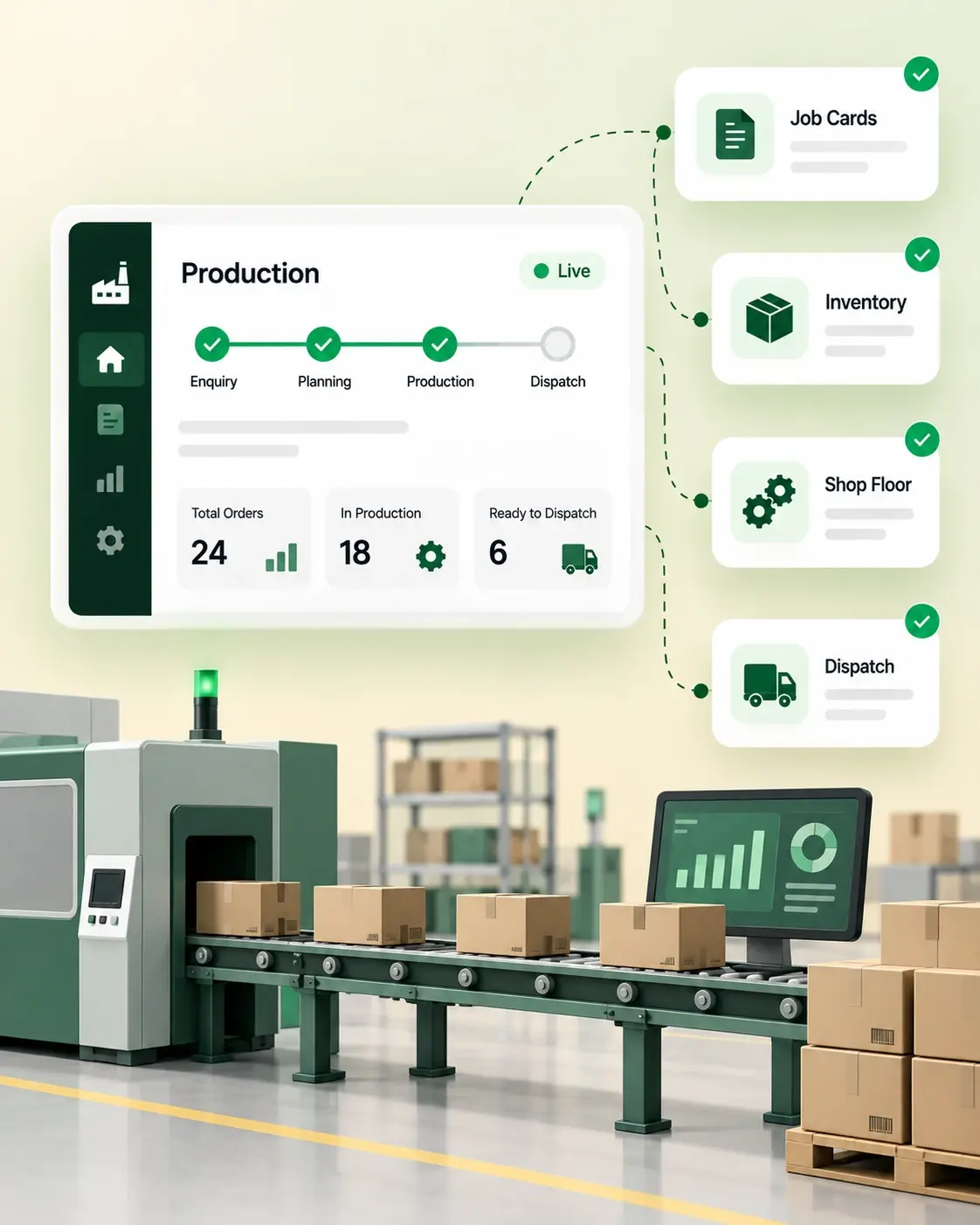
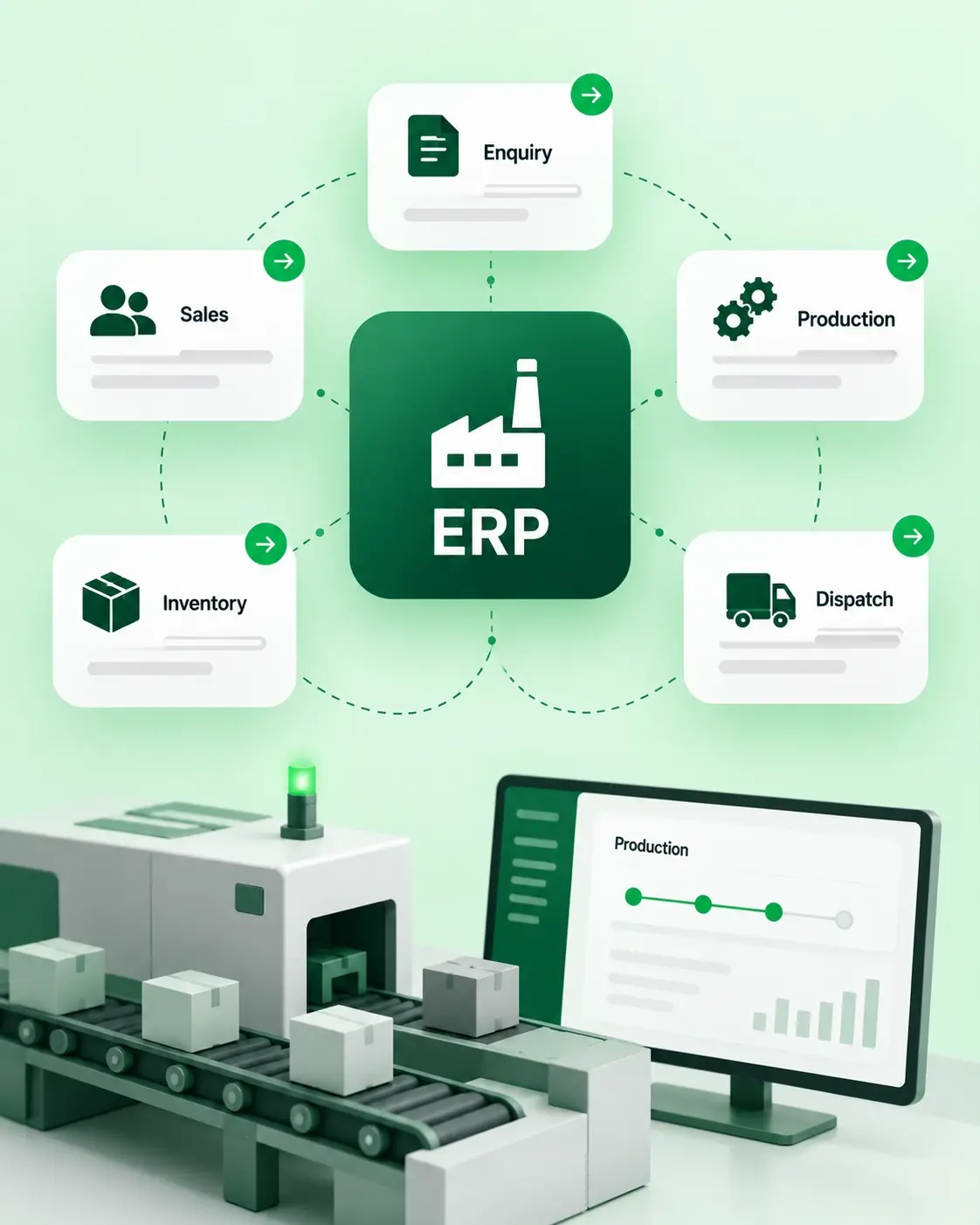
Dhumi’s manufacturing ERP systems connect your factory from the first customer enquiry through production tracking to final dispatch and invoicing. 


It replaces the spreadsheet-and-WhatsApp patchwork with one platform your whole team actually uses. 


This is why more Indian manufacturers are searching for reliable ERP software for manufacturing that mirrors their real process, not a rigid, one-size-fits-all package. 


With 35% of Indian SMEs already running some form of automation, a connected system is no longer just for big companies. It’s becoming table stakes for keeping up on delivery time.

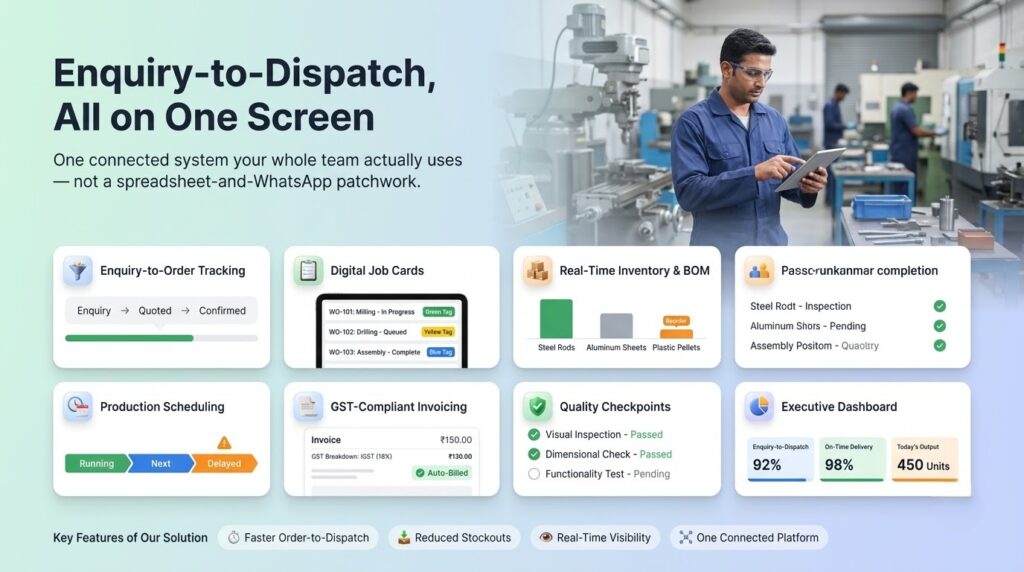
Enquiry-to-Order Tracking

Every customer enquiry is logged and followed through to a confirmed order, so nothing falls through the cracks between sales and the shop floor.

Digital Job Cards And Work Orders

Replace paper travellers with a system operators can update from a shop-floor tablet or phone.

Real-Time Inventory and BOM Management

Raw material and finished-goods stock update the moment something moves, tied to the actual bill of materials for each product, with procurement automation flagging reorders before a shortage stalls a machine.

Production Scheduling and Status Dashboards

A live view of what's running, what's next, and what's delayed, instead of a whiteboard that's out of date by lunch.

GST-Compliant Invoicing

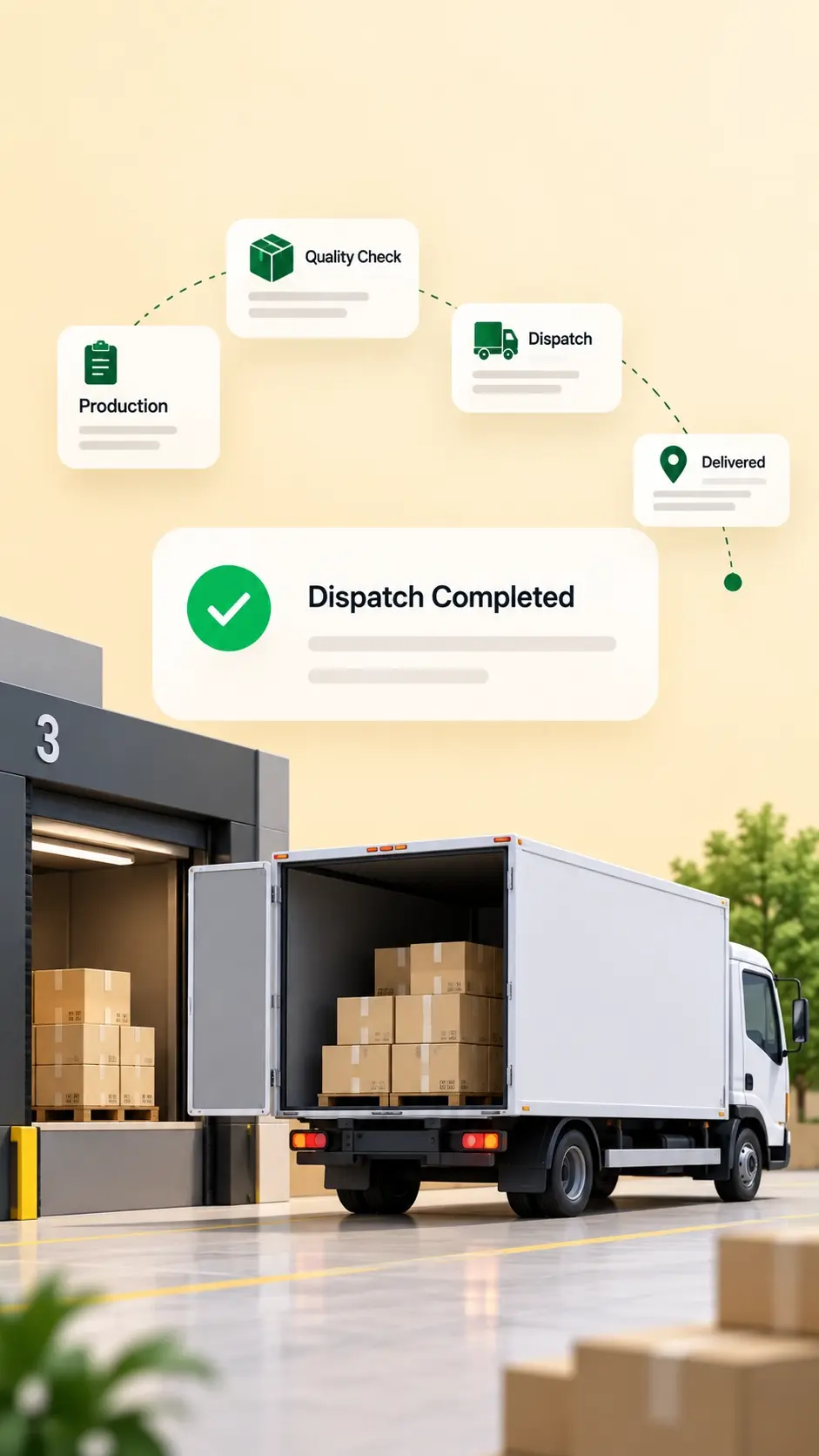
Dispatch triggers billing on its own, so finance isn't recreating what production already recorded.

Quality Checkpoints Built Into The Workflow

Quality data gets captured at the step where it happens, not pieced together afterwards.

Executive Dashboards

Owners and plant heads see enquiry-to-dispatch performance on one screen instead of chasing five people for an update.

Sales and MIS dashboards

Real numbers on repeat customers, average order value, and branch performance, updated as sales happen

Here’s what Dhumi’s manufacturing ERP software includes, module by module:

Module What it replaces What you get
Enquiry-to-order tracking Scattered WhatsApp and phone-call follow-ups A logged trail from first enquiry to confirmed order
Digital job cards Paper travelers and handwritten notes Shop-floor updates from a tablet or phone
Inventory and BOM management Manual stock counts and guesswork Real-time stock tied to the actual bill of materials
Production scheduling An out-of-date whiteboard A live view of what's running, next, and delayed
GST-compliant invoicing Manual re-entry into accounting Billing triggered automatically at dispatch
Quality checkpoints After-the-fact inspection notes Quality data captured at the process step itself
Executive dashboards Chasing five people for a status update One screen showing enquiry-to-dispatch performance

Where AI Fits Into The System?

AI doesn’t sit on top of Dhumi’s manufacturing ERP software as a separate add-on. It’s built into the workflow itself: flagging inventory that’s about to run short, routing approvals to the right person, and pointing out which orders are at risk of missing their dispatch date before it happens. 

This mirrors a broader shift already underway. 72% of organizations worldwide now use generative AI in at least one business function, and manufacturing is following the same path, with AI adoption in Indian manufacturing growing at an estimated 25% or more each year. 

The value isn’t the AI label. It’s fewer manual handoffs at exactly the points where factories lose time today.

Dhumi’s own process fact: software should adapt to the business, not the other way around. Every manufacturing ERP system Dhumi builds starts by mapping how a specific factory’s enquiry, production, and dispatch actually flow, before a single screen gets designed.

How Does A Custom Manufacturing ERP Actually Get Built Without Taking Months?

Dhumi builds a custom manufacturing ERP with a working MVP in 2 to 3 weeks - Dhumi

Most manufacturing ERP projects in India stall because the vendor sells a fixed template and asks the factory to bend its workflow around it. 

Dhumi does the opposite. It maps the client’s actual enquiry-to-dispatch process first, then builds the system around that, which is also why a working version can be running in weeks, not quarters.

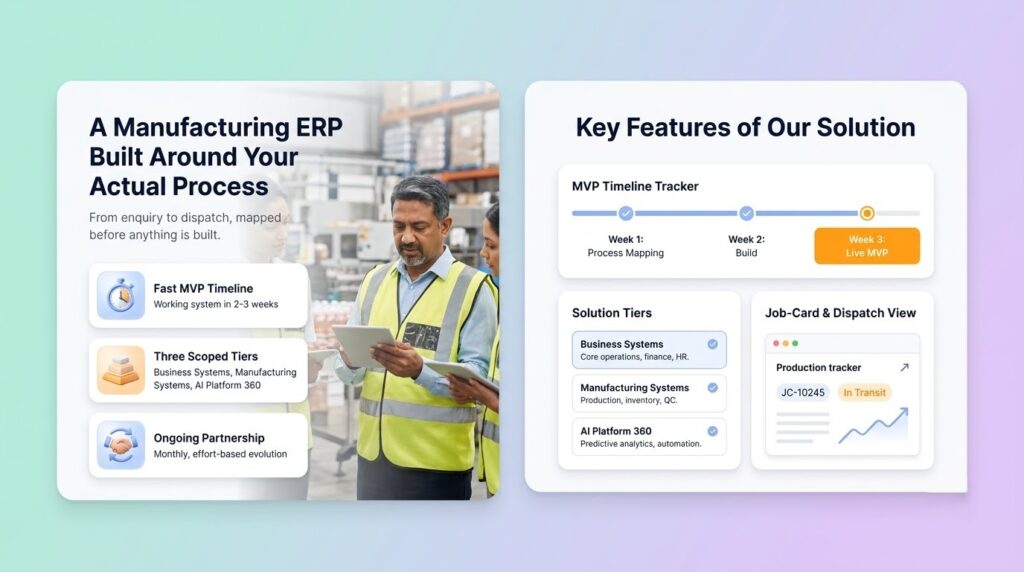
  • 2 to 3 weeks to a working MVP. The factory is using a real system fast, not waiting months for a big-bang launch.
  • 3 clearly scoped solution tiers. Business Systems, Manufacturing Systems, and AI Platform 360, so scope is set upfront instead of negotiated after a long discovery phase.
  • Monthly, effort-based partnership. The system keeps evolving with the plant's actual usage instead of shipping once and going quiet.

So what does this mean for a factory owner looking at options? It means the first working screens reflect your job-card format and your dispatch process from day one, not a generic manufacturing template you have to adapt to.

How Does Dhumi's Manufacturing ERP Implementation Process Work?


Week 1

Map Your Workflow

Dhumi's team sits with production, sales, and dispatch to write down exactly how an order currently moves through the factory, including the parts of the process that live only on paper or in someone's head. This matters because 50% of manufacturers still fall back on Excel or paper alongside their existing ERP, often exactly when the system doesn't match reality.

Week 2 to 3

Build and Launch The Working MVP

The core enquiry-to-dispatch flow, digital job cards, and inventory tracking go live as a working system the team can start using right away, not a demo.

Weeks 3 to 4

Connect Finance And Quality

GST invoicing, BOM-linked stock, and quality checkpoints get wired into the same platform so nothing needs to be re-entered.

Ongoing

keeps improving

As usage shows what's missing or what should change, Dhumi builds it into the system as part of the monthly partnership, not as a separate change request or a new contract.

Every step is built to be checkable. The factory can see the system running in weeks 2 to 3, not just read about it in a project plan.

Why Manufacturers Choose Dhumi's ERP Software for Manufacturing Over a Standard License

Manufacturers comparing ERP software for manufacturing industry providers usually notice the same gap: everyone lists features, but almost nobody explains how the system gets built around your specific factory. Here is why manufacturers pick Dhumi instead.

gradient-border

Built Around Your Workflow

Not a generic manufacturing template. The mapping-first process means the first version already looks like your workflow.

case icon
gradient-border

One Connected Platform

Instead of separate tools for CRM, inventory, invoicing, and dashboards that never talk to each other.

case icon
gradient-border

AI Embedded in The Operational Layer

Inventory alerts, approval routing, and delay flags built into the workflow, not sold as a bolt-on module.

case icon
gradient-border

A Partnership That Grows With You

No license-and-disappear model. The subscription continues because the factory keeps getting value, not because of a lock-in contract.

case icon

India-Relevant, Enterprise-Grade Thinking Built for MSME Scale

With India's 8.7 crore-plus registered MSMEs now formalising operations, a system built for that scale, not a scaled-down enterprise license, is the more honest fit.

case icon

Side by side, the difference in how a manufacturing ERP gets delivered looks like this:

Standard ERP license Dhumi's manufacturing ERP software
Starting point A fixed template you adapt to Your actual enquiry-to-dispatch workflow, mapped first
Time to first use Months of discovery and configuration A working MVP in 2 to 3 weeks
AI Sold as a separate add-on module Built into the operational layer from day one
Relationship after launch License sold, support optional Monthly, effort-based partnership that keeps evolving
Tools CRM, inventory, invoicing often separate One connected platform

What Does Dhumi's Manufacturing ERP Software Cost?

Dhumi’s Manufacturing Systems tier includes CRM, digital job cards, BOM and inventory tracking, GST invoicing, dashboards, and AI automation. Pricing is customised based on your factory’s specific modules, integrations, and production complexity rather than a generic template.

This is a dedicated manufacturing ERP solution, not a repurposed package. In contrast, manual operations and inefficient planning cost manufacturers an estimated 5 to 10% of annual revenue typically exceeding the annual cost of running the software.

Here’s how Dhumi’s manufacturing ERP and business software tiers compare:

Tier Best for What's included
Business Systems Retail, distribution, and service businesses that need core CRM and process visibility CRM, dashboards, invoicing, automation, internal apps
Manufacturing Systems Fabrication, machining, and components businesses running enquiry-to-dispatch operations Everything in Business Systems, plus production tracking, BOM management, and shop-floor job cards
AI Platform 360 Businesses and startups that need a broader connected platform with advanced AI Everything in Manufacturing Systems, plus AI agents and added communication layers

Not sure which plan fits your operation? Let’s talk it through.

Ready To See Your Actual Workflow Running In A System, Not A Spreadsheet?

The right manufacturing ERP software India only earns its cost when it matches how your factory really works, not a template you have to bend around. 


Dhumi maps your enquiry-to-dispatch process first, then builds and launches a working system in 2 to 3 weeks.

Not sure which plan fits your operation? Let’s talk it through.

Frequently Asked Questions About
Manufacturing ERP Software

Explore our most frequently asked questions to get started.

Manufacturing ERP software is a system that connects a factory's core operations, enquiry, production planning, inventory, quality, and dispatch into one platform. It replaces separate spreadsheets and paper trackers with a single source of truth.

It removes the manual re-entry and miscommunication that happen when sales, production, and finance each track orders separately. With 68% of small manufacturers still relying on Excel for production planning, the biggest gain is usually just having one place where enquiry status, stock levels, and dispatch dates all agree with each other.

The best ERP software for manufacturing is the one that matches your actual workflow, not a generic template you're forced to adapt to. A custom-built system like Dhumi's is mapped to your specific enquiry-to-dispatch process from the start.

Cost depends on the modules you need and how complex your production process is. Dhumi scopes this out during the initial process walkthrough and gives you a clear number before any work begins, not a vague "contact us" quote.

It should, for anything that needs real-time accuracy: job status, stock levels, dispatch schedules. Teams sometimes keep Excel for one-off analysis, but tracking that lives only in Excel is exactly what causes the visibility gaps a proper ERP system is built to close.

Dhumi builds a working MVP in 2 to 3 weeks covering the core enquiry-to-dispatch flow, then keeps adding modules like quality checkpoints and advanced reporting through the ongoing monthly partnership, instead of one long rollout before anyone can use it.

Yes. Pricing is scoped to your modules and complexity from the start, which usually puts it closer to what MSMEs already spend patching together separate tools, not an enterprise-only investment.

Used well, AI in manufacturing ERP means practical things: flagging low stock before it stalls a machine, routing approvals on its own, and predicting which orders risk missing dispatch. It's a real part of the workflow, not a headline feature added just to sound modern.

```

Still Have Questions?

Support details to capture customers that might be on the fence.