Map Your Real Lead Flow
Dhumi's team sits with you to see exactly where your leads come from today, who handles them, and where they usually go quiet: spreadsheets, WhatsApp chats, and all.
Lead management software is supposed to catch every lead before it goes cold. Most tools do the opposite: they make you change how you sell just to use them. Dhumi builds the system around the way your team already works, not a template you have to force your process into.
Supported by
Indian businesses that use a proper lead management software system see sales cycles move 40–50% faster, because leads stop waiting on someone to notice them.
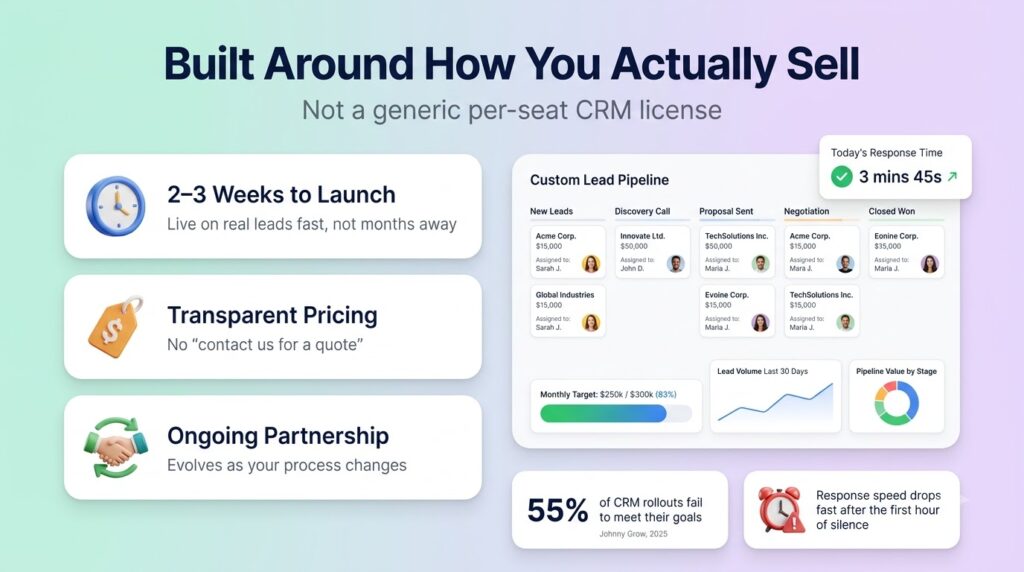
This version is built around how your leads actually enter and move through your sales funnel, not a generic pipeline you have to change your process to fit.
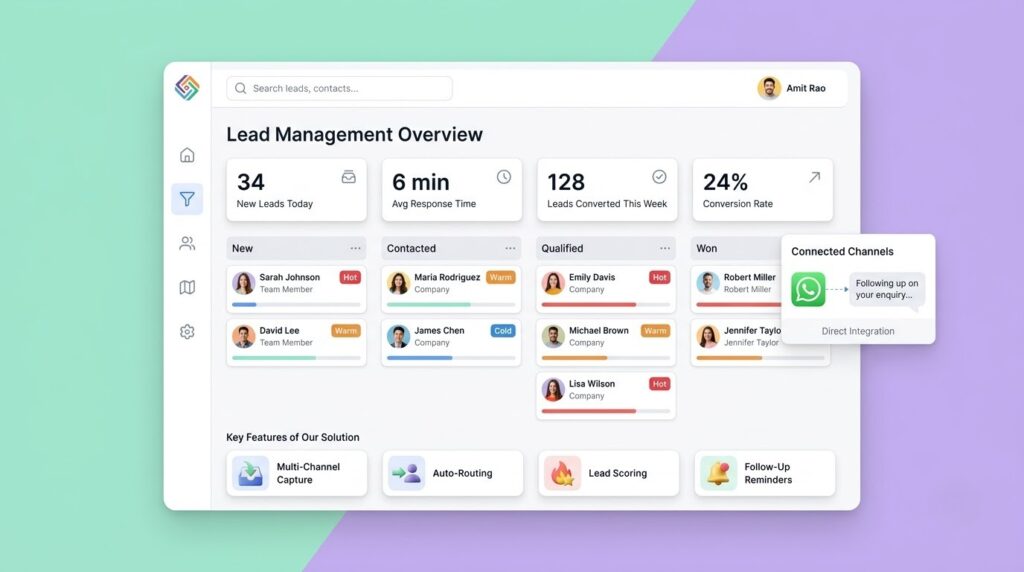
Every lead from your website, WhatsApp, ads, IndiaMART, or a walk-in lands in one place, instead of five.
The moment a lead comes in, it's routed to the right person or branch, based on rules that match how your team already splits work.
So your team spends time on the prospects most likely to close, not every name in the funnel.
the system flags every lead that's gone quiet, so nothing sits untouched for days.
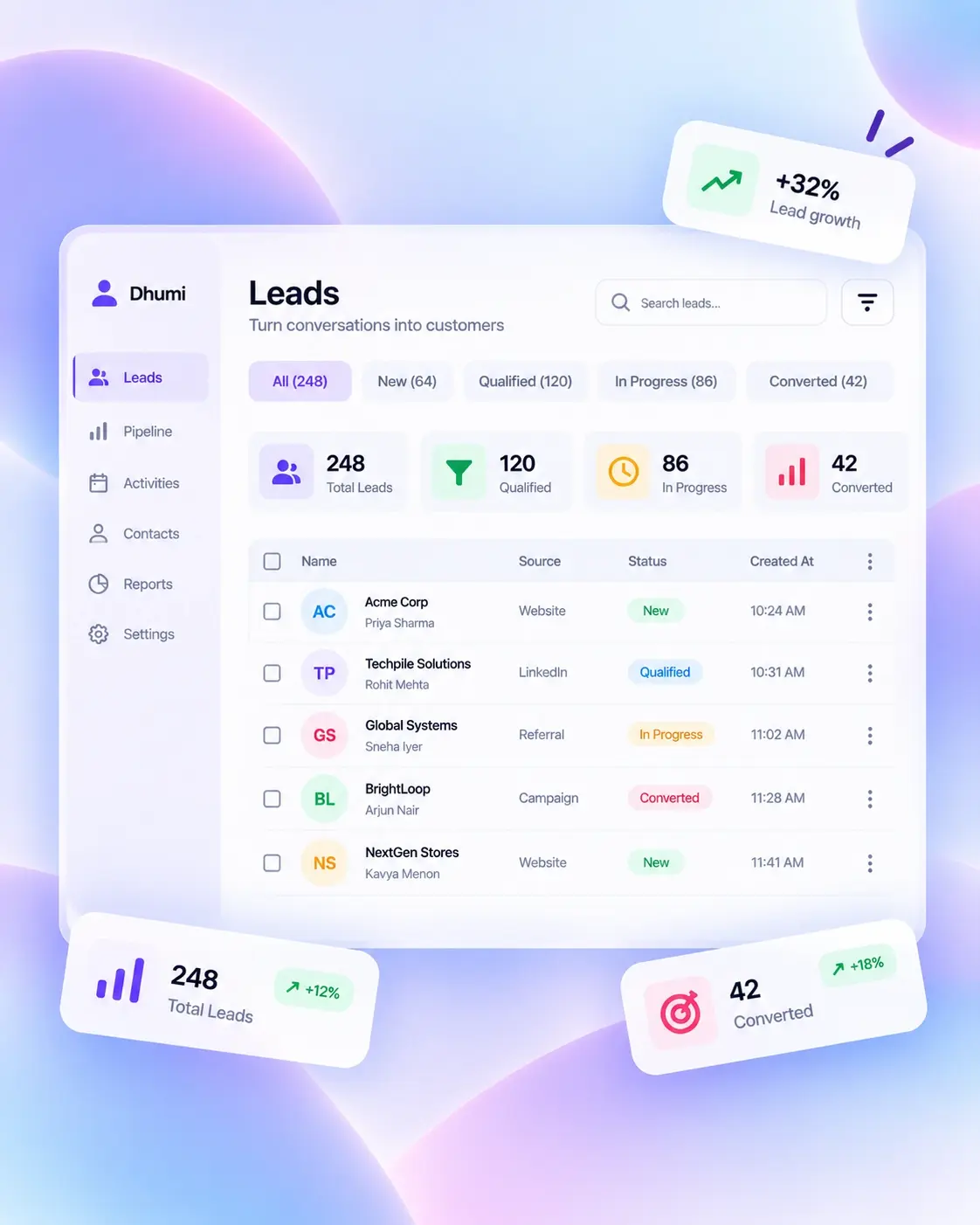
See exactly which stage every lead is in, and which ones are stuck, without asking your team for an update.
Since WhatsApp is where most Indian sales conversations already happen, it's connected to who owns the lead and what follow-up is due, not left as a separate app your CRM can't see.
Which channel actually brings paying customers, so ad spend goes where it works.
Real numbers on repeat customers, average order value, and branch performance, updated as sales happen
Most lead management software in India charges one fixed price per seat for the same product, no matter how your business actually sells.
If you’ve spent any time comparing lead management software India options, you’ve probably noticed they all look the same: same modules, same per-user pricing, same generic pipeline.
Dhumi starts differently. It maps how your leads really move through your business first, then builds the system around that.
Three things make the difference between a tool your team ignores and one they actually use:
Speed matters here because of something already proven: found that a lead’s chance of turning into a sale drops fast after the first hour of silence, no matter which software a company runs.
A faster system only helps if it’s actually built around how your team works, which is the part most off-the-shelf CRMs skip.
55% of CRM rollouts fail to meet their goals, mostly because teams don’t end up using them, usually because the software was built for a generic sales process, not the one the team actually runs.
Dhumi's team sits with you to see exactly where your leads come from today, who handles them, and where they usually go quiet: spreadsheets, WhatsApp chats, and all.

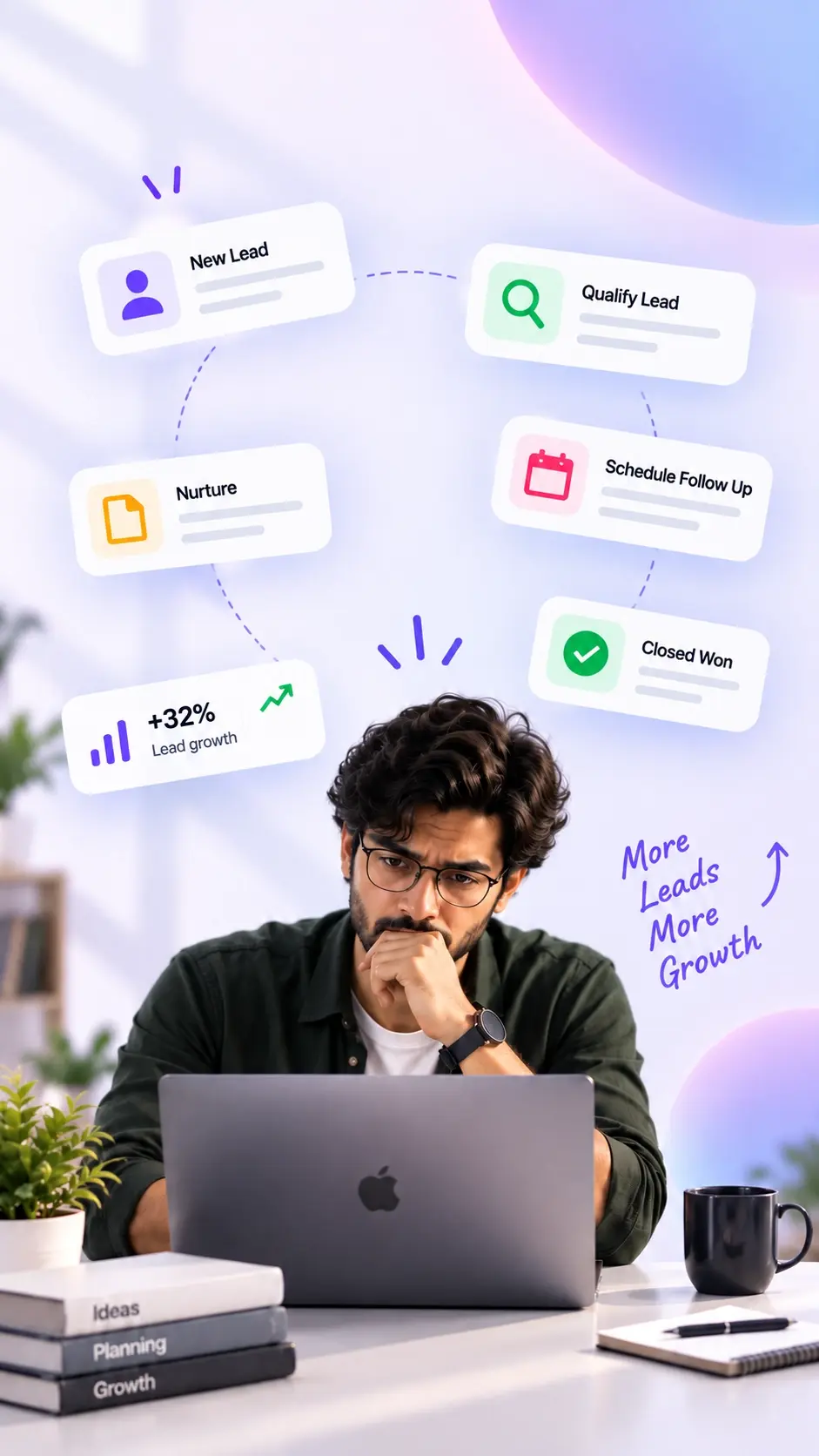
Using that map, Dhumi builds a working lead management software system: capture, routing, lead nurturing, follow-up reminders, and a pipeline view your team can start using right away.
Your team starts working real leads inside the system, not a demo. Since 62% of Indian SMB teams are still on spreadsheets, this is often the first time leads are tracked in one place at all.
As your lead sources, team, or process change, the system changes with it, as part of the same monthly partnership, not a separate request every time.
Done this way, a CRM tends to pay for itself. A well-used system returns roughly ₹3.10 for every ₹1 spent.
The best lead management software isn't the one with the most features. It's the one built around how your team actually sells, with pricing you can see before you pick up the phone.
Not a template with your logo on it. Dhumi maps how you work first, then builds.

Follow-up prompts, lead flagging, and routing happen inside the system, not as a separate tool you have to check.
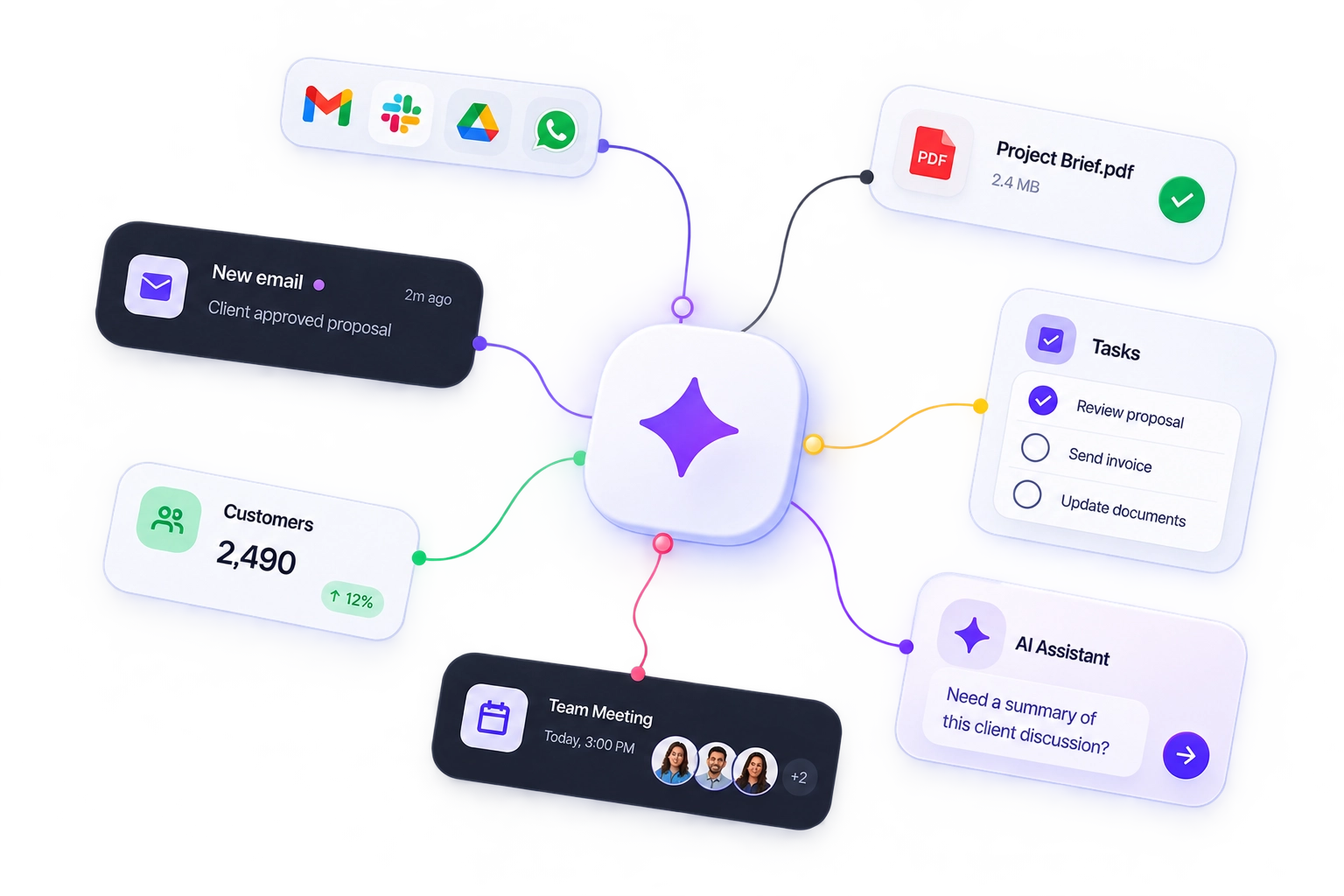
lead management, invoicing, and dashboards all live together, instead of a CRM that doesn't talk to your billing tool.
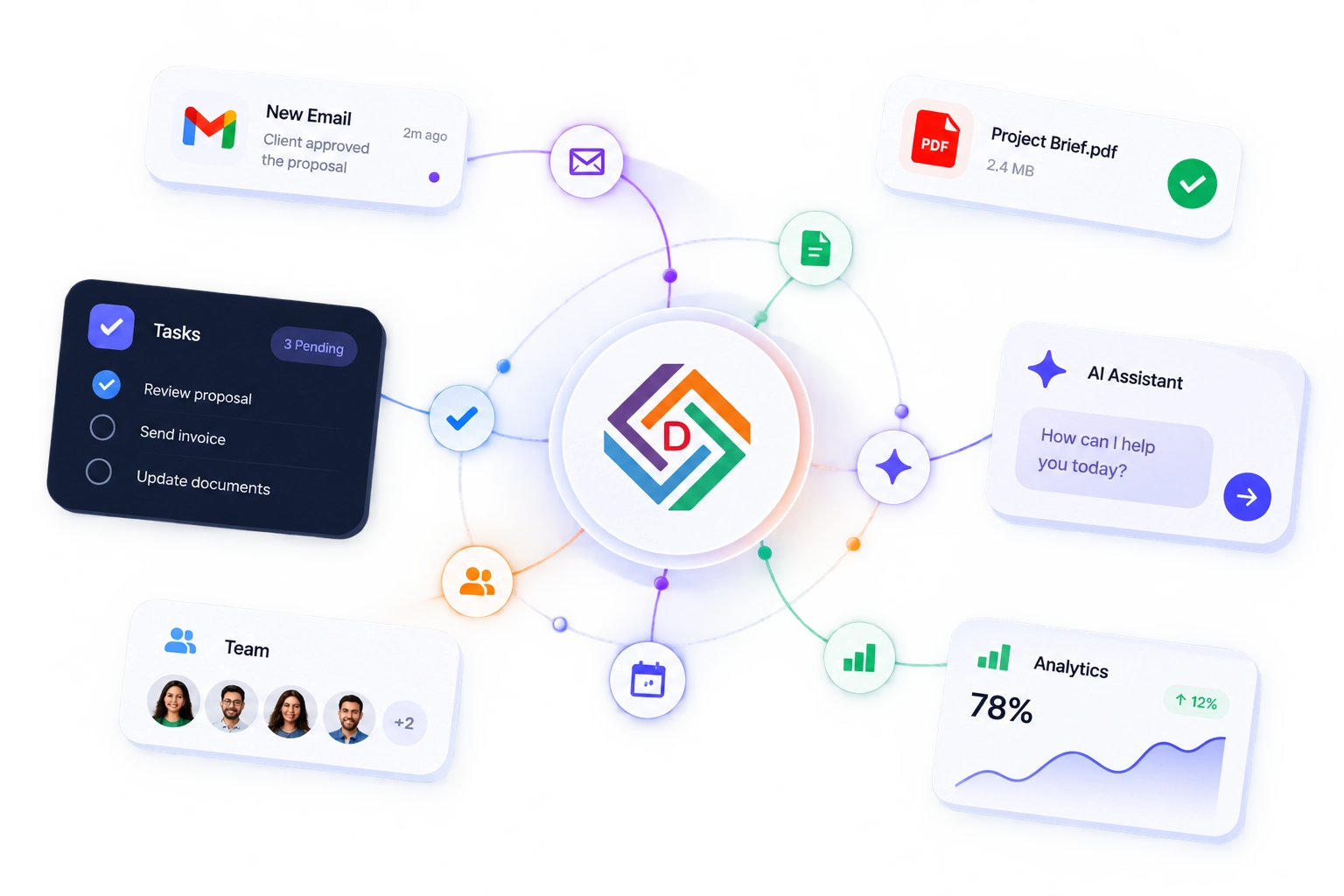
you see what things cost, not just a "book a call" button.

WhatsApp, IndiaMART, and local payment and invoicing needs built in, not added on later.
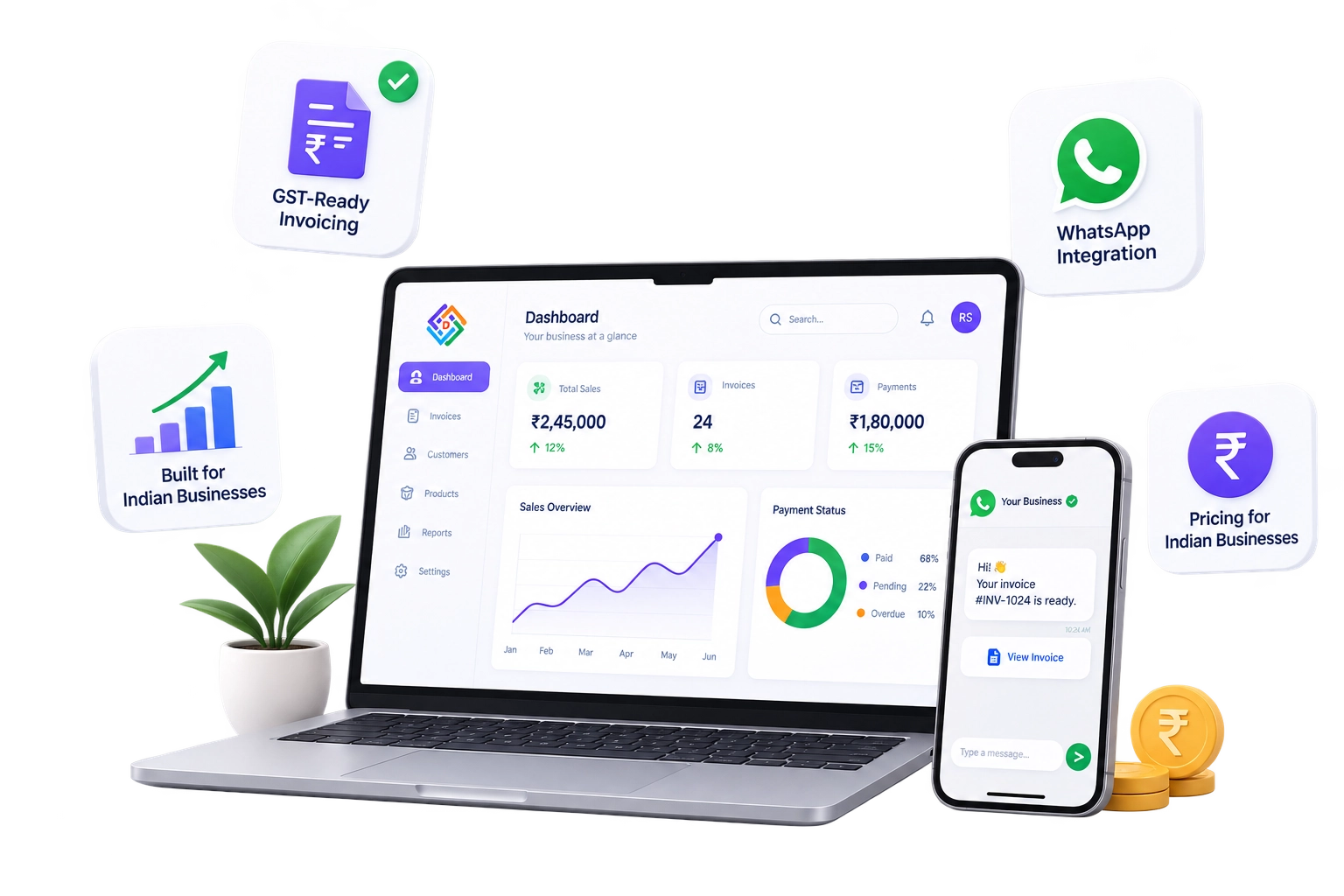
For b2b lead management software specifically, this matters even more.
B2B leads move through longer cycles with more handovers between marketing, sales, and sometimes a second decision-maker, so a stuck lead costs more: each one is worth more and takes longer to replace than a typical B2C lead.
The CRM market is growing fast worldwide, but buying a license alone doesn’t fix a broken process. The system has to match how your team actually sells.
Lead management comes as part of Dhumi’s core business systems. It isn’t sold as a separate add-on.
| Tier | Talk to an Expert | Best For |
|---|---|---|
| Business Systems for SMBs | Custom, based on scope | Agencies, distributors, retail, and B2B service teams that need lead capture, routing, and follow-up in one place |
| Manufacturing Systems | Get a Quote | Fabrication and manufacturing businesses that need leads connected through to production and dispatch |
| AI Platform 360 | Production Automation | Teams that want AI agents handling qualification and follow-up, plus WhatsApp automation, on top of core lead management |
Not sure which plan fits your operation? Let’s talk it through.
Every tier above includes the same lead management software core: multi-channel capture, routing, follow-up reminders, and a live pipeline.
What changes between tiers is how deep the automation goes, and whether production tracking or AI agents get layered on top.
The right lead management software turns leads you’ve already paid for into deals, instead of names sitting in a spreadsheet nobody follows up on. Dhumi builds that system around how your business actually sells, live in 2–3 weeks.
Not sure which plan fits your operation? Let’s talk it through.
Explore our most frequently asked questions to get started.
Lead management software is a system that gathers leads from every channel - website, WhatsApp, ads, referrals - keeps them in one place, and tracks each one all the way to a sale, instead of leaving that to memory or spreadsheets.
They overlap a lot. A CRM covers the full customer relationship, even after the sale. Lead management focuses on capturing, routing, qualifying, and following up before a lead becomes a customer. Most modern platforms, including Dhumi's, handle both together.
Yes, for Indian businesses, it needs to. Dhumi connects WhatsApp chats directly to who owns the lead and what follow-up is due, instead of leaving WhatsApp as a separate app the system can't see.
It depends on your scope and team size. Dhumi's lead management tools come as part of its Business Systems for SMBs tier, and move up based on which extra modules, like production tracking or AI agents, your business needs.
Dhumi builds a working system in 2–3 weeks by mapping your real lead flow first, then building around it, so your team is using it on live leads, not a demo, by week three.
The monthly partnership covers that. Changes to routing rules, new lead sources, or a new team structure get built in as part of the ongoing plan, not billed as a separate project each time.
At that volume, a light system is usually enough. The switch is worth making the moment a second person starts handling leads; that's usually when follow-ups start slipping through spreadsheets.
Yes, often more than for high-volume B2C. B2B leads move through longer cycles with more handovers, so a stuck lead is a bigger loss per deal. That's where the 40–50% faster sales cycle figure mentioned earlier comes from most often.
Support details to capture customers that might be on the fence.