Map your Workflow
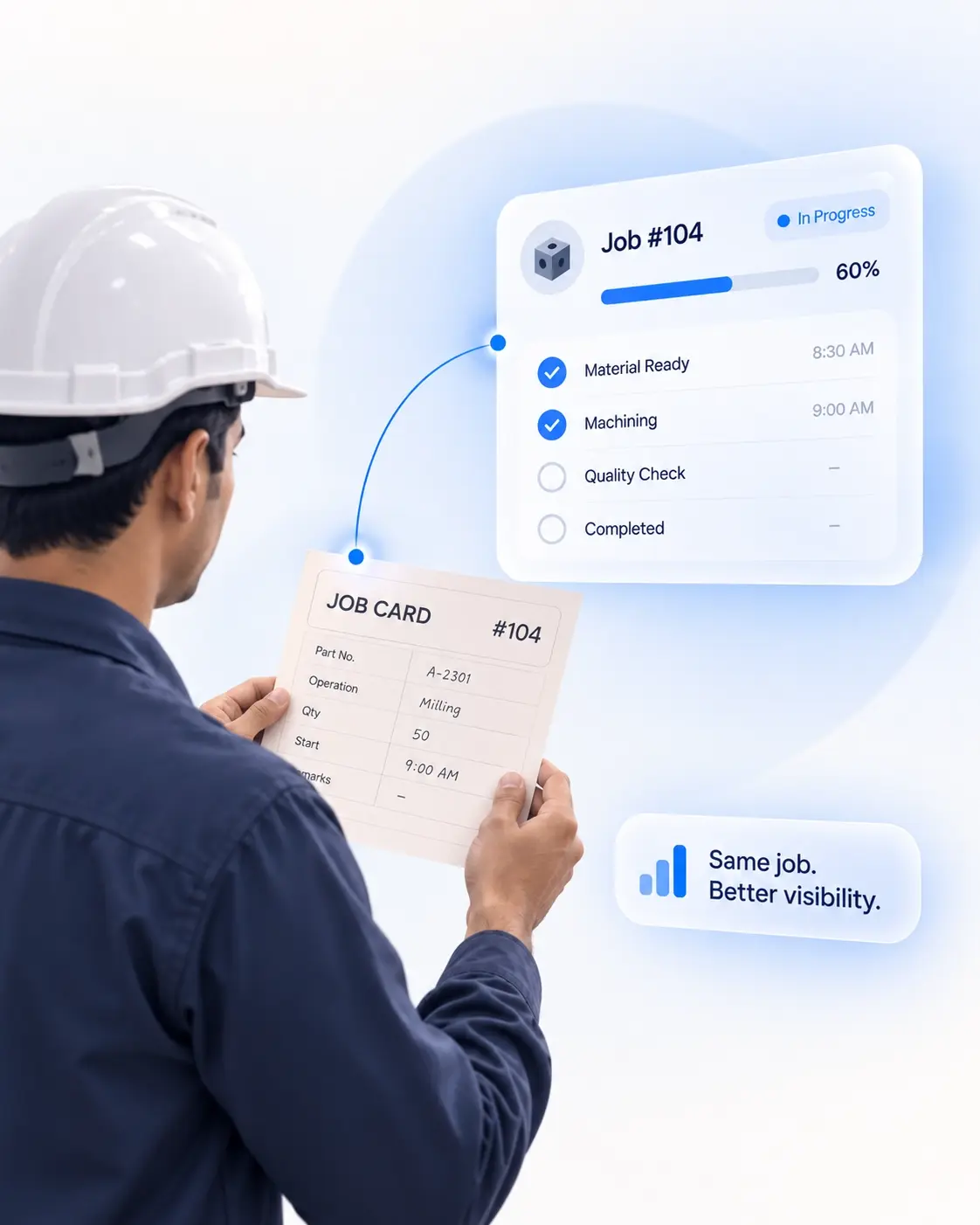
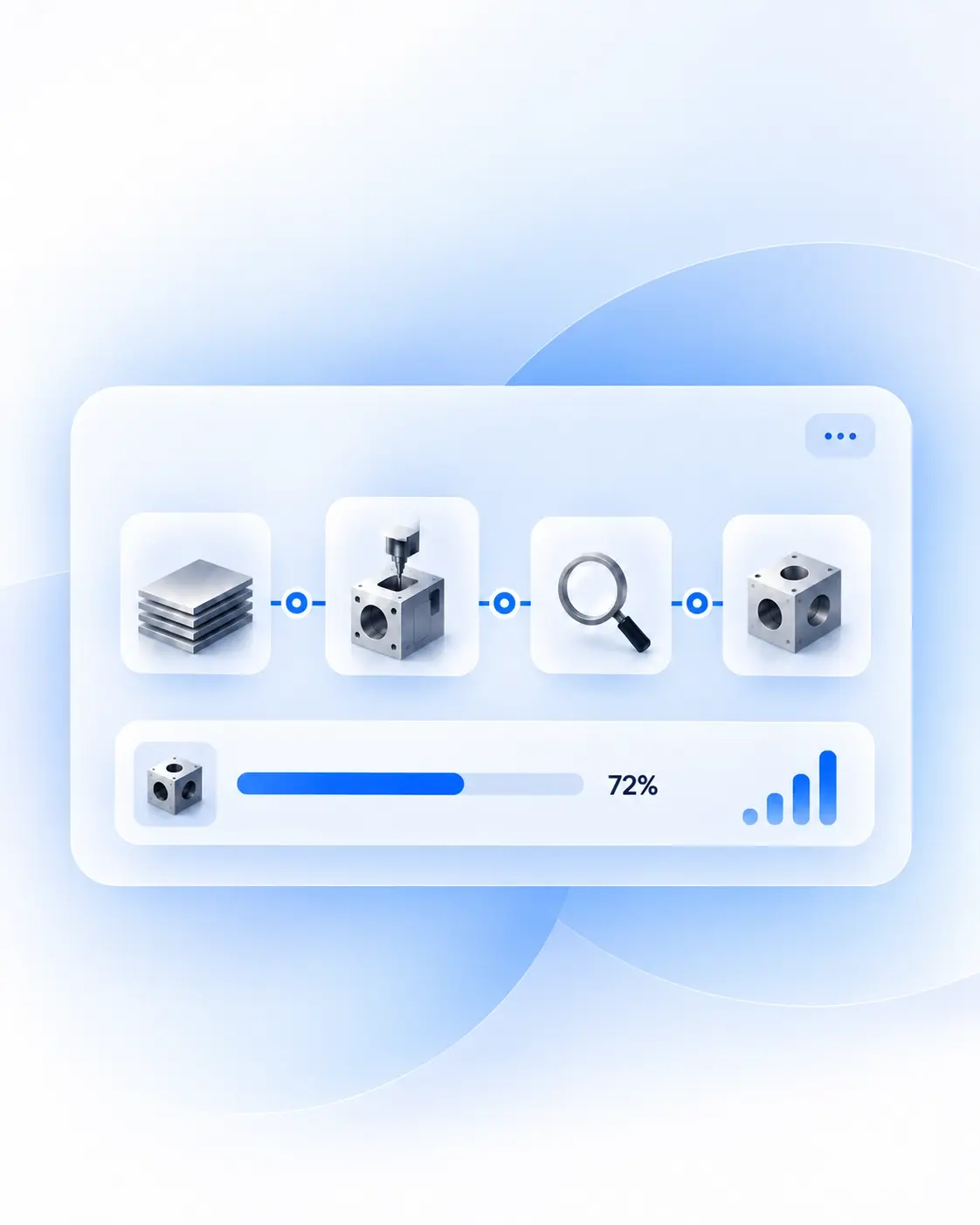
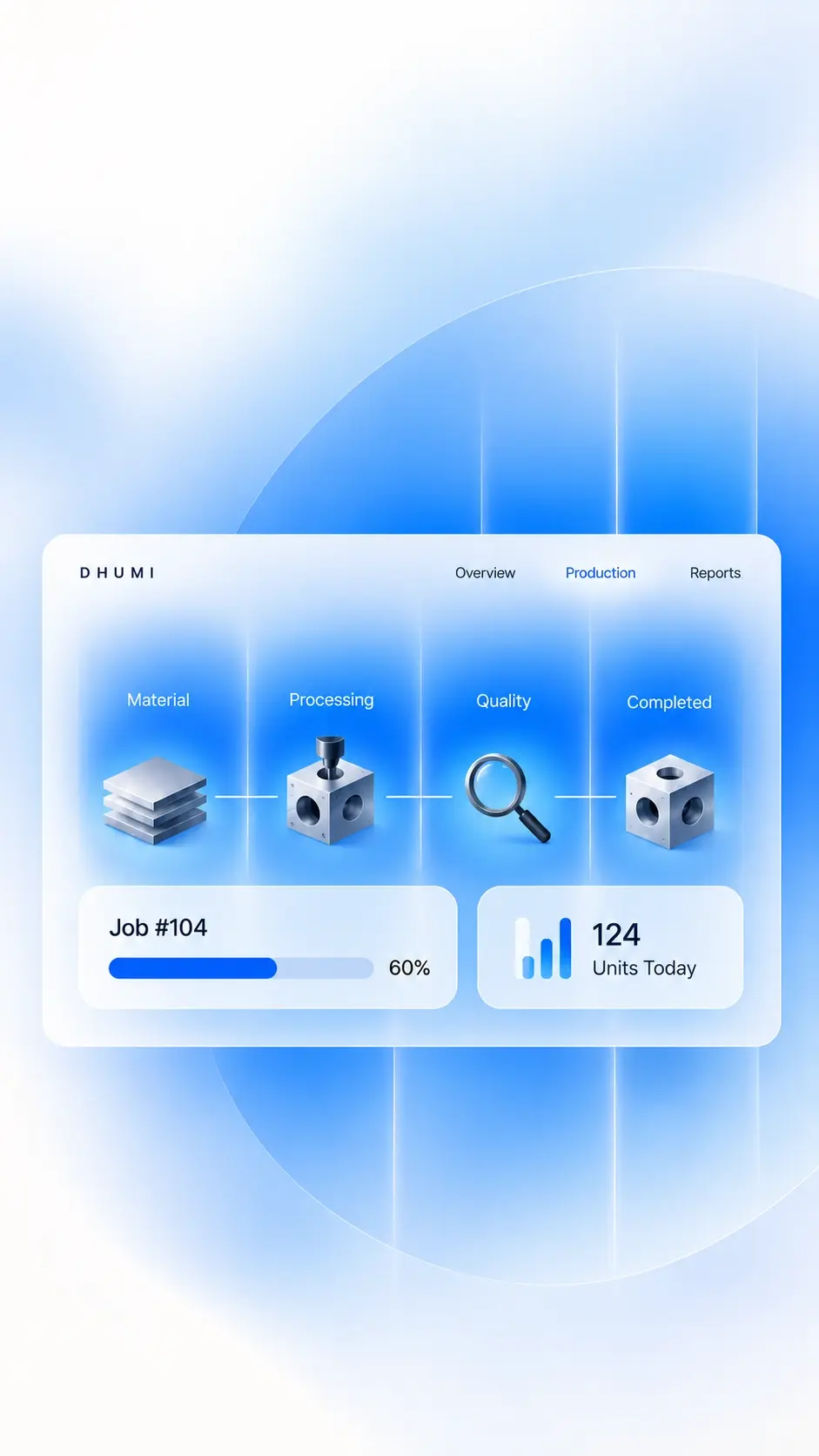
Dhumi maps your process to show how a job moves from enquiry to job card to dispatch, pinpointing delays and the stations that need direct tracking. Nothing is designed before this step.
Most shop floors still run without real manufacturing production tracking software in place just paper job cards, WhatsApp updates, and a supervisor's memory. Most of India's 63 million MSME manufacturers still track production this way.
Supported By
The average plant loses close to 800 hours a year to unplanned downtime. A lot of that time is lost simply because nobody knew a machine was idle until the shift review.
Without dependable manufacturing production tracking software, the gap between shop floor reality and office perception shows up in a few clear ways for automotive and industrial equipment manufacturers alike.
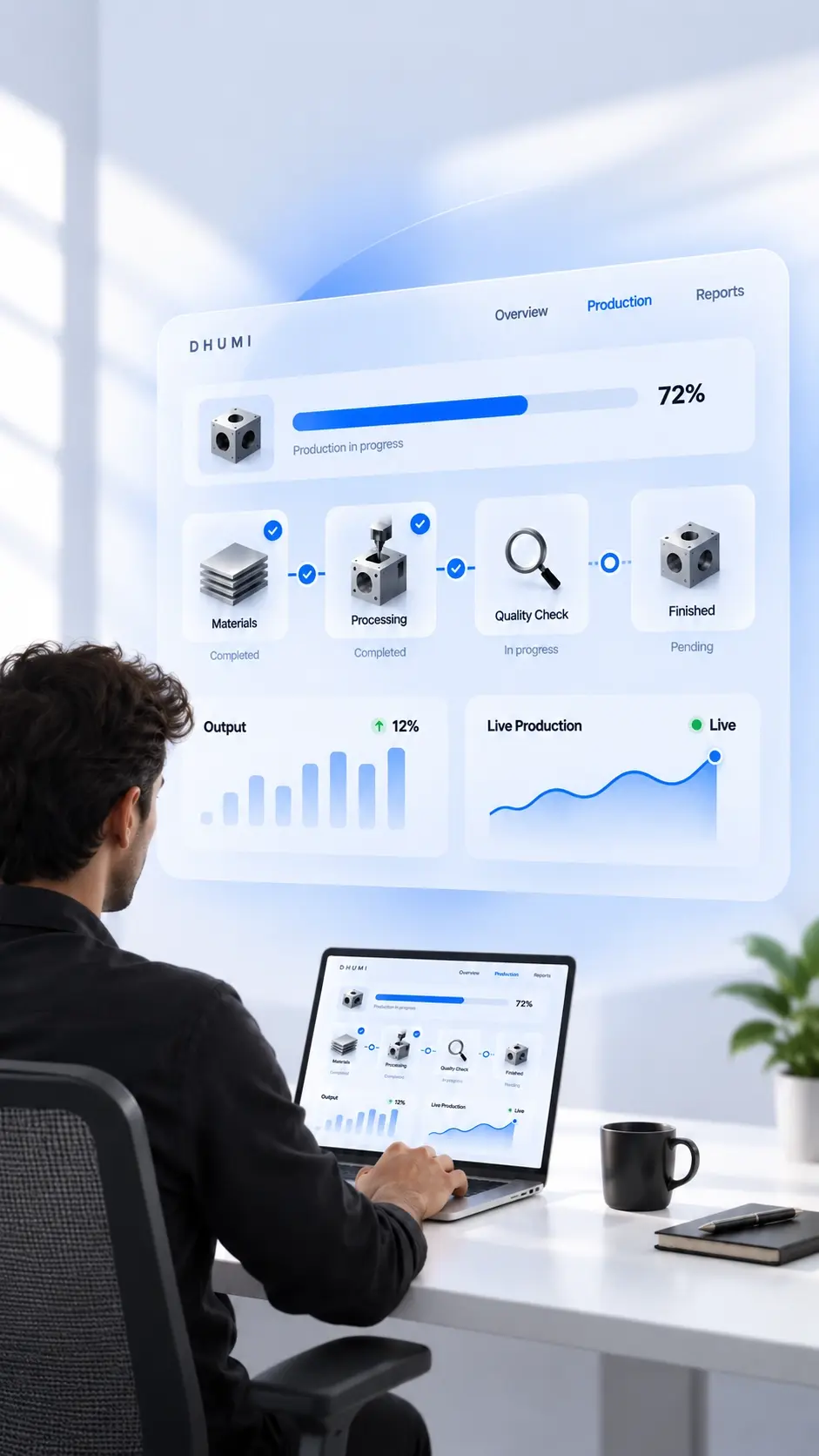
Manufacturing production tracking software sits between your enquiry pipeline and your dispatch note the same core capability behind the production tracking solutions industrial equipment manufacturing teams rely on for long, multistation build cycles.
It records where every job is, in real time, without someone walking the floor to check by hand. Demand for this kind of visibility is rising fast.
AI use in daily business workflows has climbed to 88 per cent, up from 78 per cent last year, and manufacturers are a big part of that shift.
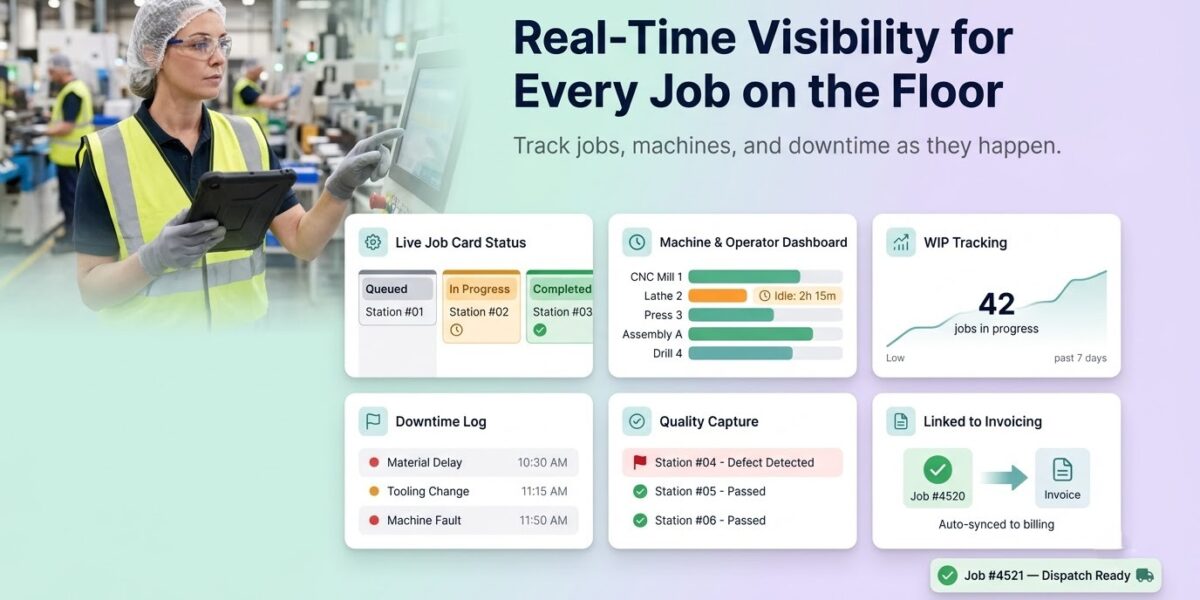
Sees each order's stage as soon as a station marks it done, not just at shift's end.
Spot idle time and bottlenecks as they happen.
Knows exactly how much work is waiting and why.
Spot recurring problems, such as material delays or tooling changes, before they repeat.
flag problems where they occur, not three steps later.
Completed jobs go straight into billing, with no manual reentry.
Real numbers on repeat customers, average order value, and branch performance, updated as sales happen
The honest answer: it starts with watching how your business and floor works before a single screen gets designed.
Equipment failure causes 42% of unplanned downtime across industries, and most of it goes unnoticed until someone tracks cause codes consistently, which only happens if the system matches how operators actually work.
| Dhumi fact | What it means for you |
|---|---|
| 2 to 3 weeks to a working version | Your team uses real data almost right away, not after months of waiting |
| Three clearly scoped tiers | You always know what you're getting no mystery about the price |
| Monthly, effort-based partnership | The system keeps evolving as your floor does |
Dhumi’s process for manufacturing production tracking software starts with mapping your actual workflow, not a generic manufacturing template, and getting a working version onto the floor in 2 to 3 weeks.
Your team starts using real data almost immediately instead of waiting months for a big launch.
Dhumi maps your process to show how a job moves from enquiry to job card to dispatch, pinpointing delays and the stations that need direct tracking. Nothing is designed before this step.

A tracking system goes live on your floor. Job card status, machine use, and dispatch linkage start from day one.
Production data flows into invoicing and, where useful, into a management dashboard so plant leadership sees the same live picture as the floor.
As new bottlenecks or reporting needs arise, like a new machine or customer requirement, the system expands under the same partnership.
Because the model is a monthly, effort-based partnership rather than a one-time build, your manufacturing production tracking software only keeps running if it’s still delivering value a different incentive than a vendor who disappears after go-live.
For businesses running production tracking solutions for automotive manufacturing and production tracking solutions for industrial equipment manufacturing, generic tracking software built for large enterprise plants often assumes machine sensors and IT setups a midsized shop simply doesn't have yet. Dhumi builds around what you actually have on the floor today.
Built around your actual workflow, not a generic template you have to bend your business to fit

AI built into daily work, sorting tasks and handling documents inside the system, not sold as a separate add-on
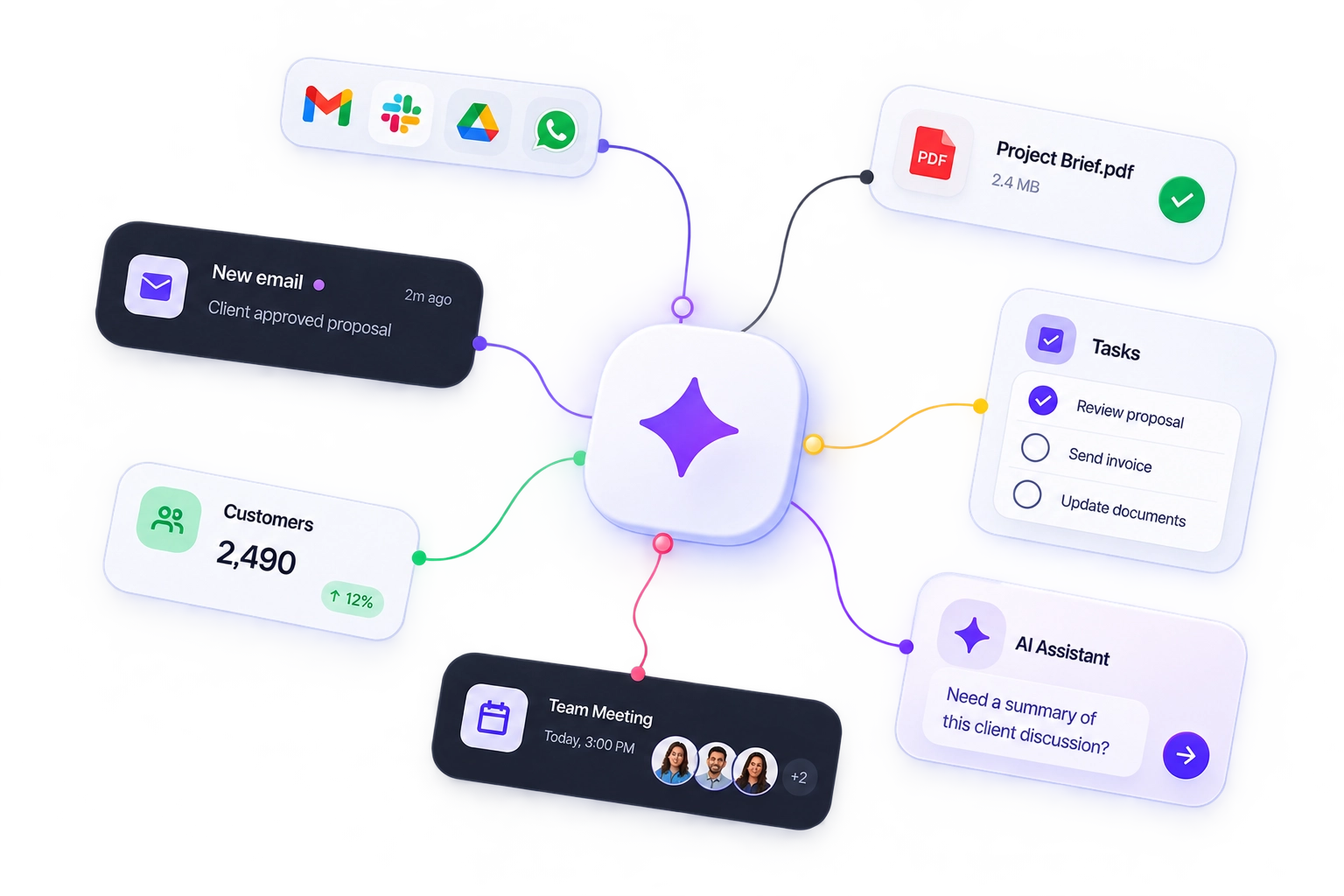
One all-in-one platform instead of a pile of separate apps, spreadsheets, and WhatsApp chats
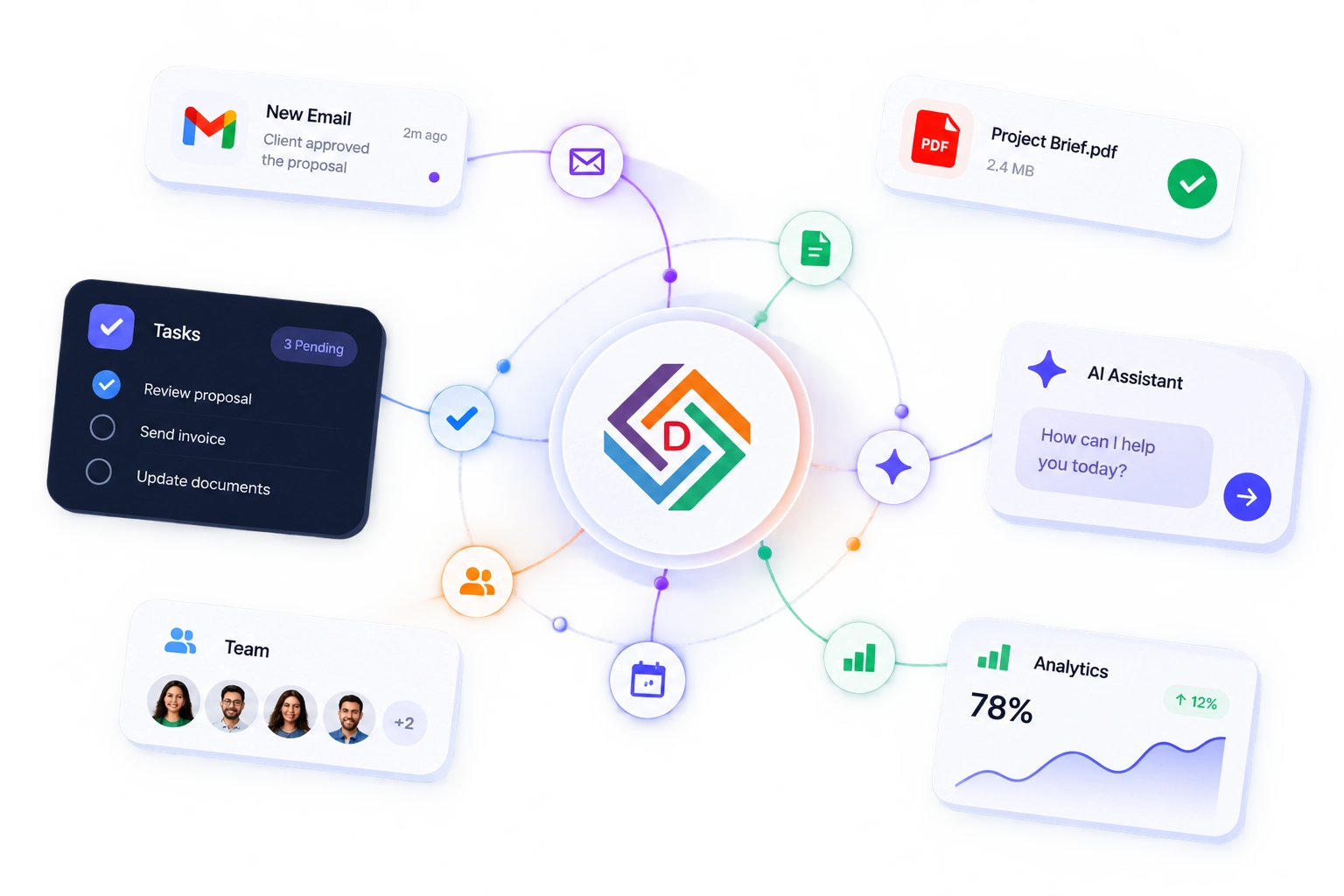
An ongoing monthly partnership, not a one-off project where the vendor disappears after launch

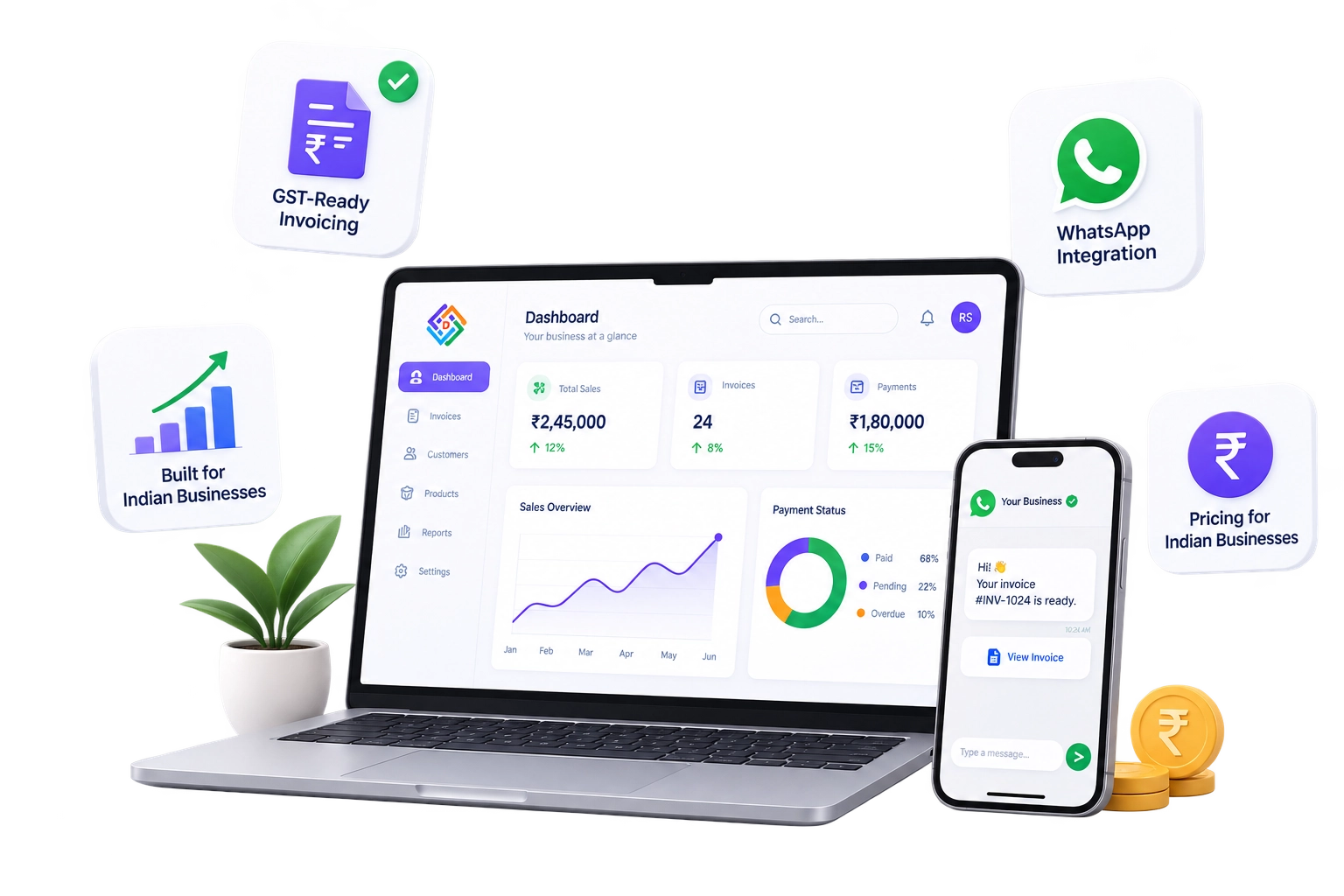
Made for India from the start, with GST-ready invoicing, WhatsApp integration, and pricing tailored for Indian businesses, not U.S. enterprises
The cost of the Manufacturing Systems tier is discussed openly on a first call, along with exactly what’s included, before you commit to anything rare in this category, and worth being upfront about.
Most retail CRMs ask you to fit your business into their template you adjust your workflow, your pricing, and your reporting to whatever the software already decided. Dhumi flips that: the system gets built around how your team actually works. Here’s what that looks like in practice.
| Category | Details |
|---|---|
| Cost Factors | Number of stations, required integrations, and reporting complexity. |
| Usually Included | Job card tracking, machine/operator dashboards, WIP visibility, downtime logging, quality capture, and direct invoicing link. |
Every quote for manufacturing production tracking software gets scoped clearly with you before any commitment, so there are no surprises later.
Everything aligns with your mapped workflow, not just a fixed feature list. Unplanned downtime alone can cost a midsized plant far more in a month than this kind of system does, usually the first thing a plant manager checks when weighing the investment.
Not sure what this would look like for your operation? Let’s talk it through.
Manufacturing production tracking software exists so every hour a job sits untracked isn’t an hour your team spends guessing instead of managing.
Dhumi maps your floor, builds a working system in 2 to 3 weeks, and keeps it evolving through an open, monthly partnership.
Explore our most frequently asked questions to get started.
It's software that tracks every job or order in your production process, so you can see its status in real time from enquiry to dispatch, replacing end-of-shift paperwork or verbal updates.
An MES usually focuses on execution at the machine level. An ERP handles planning, inventory, and finance. Dhumi's manufacturing production tracking software sits across both: it tracks shop floor activity like an MES, then links that data to invoicing and dashboards like an ERP without needing separate systems pieced together.
Yes. Production tracking solutions for automotive manufacturing need to meet strict supply chain visibility demands, since large OEMs require traceability from Tier 1 and Tier 2 vendors. Dhumi maps your unique production steps, such as stamping, machining, or assembly, instead of forcing a one-size-fits-all automotive template.
Yes. Equipment with multiweek build cycles needs production tracking solutions industrial equipment manufacturing teams can rely on, ones that lean on WIP tracking and station-level status more than on machine-level sensor data. Dhumi's mapping-first approach reflects that difference instead of forcing a fast-cycle framework onto a slow-cycle process.
It depends on your scope, how many stations, which integrations, and how much reporting depth you need. Dhumi walks through this openly on a first call, so you know what you're paying for before you commit to anything.
A working version goes live on your floor in 2 to 3 weeks. Full integration with invoicing, existing machine data, and management dashboards usually continues to build out over the following weeks under the same monthly engagement.
Yes. This gets scoped during the mapping phase in week one, based on what systems you're already running.
The monthly partnership model exists for exactly this. New reporting needs, stations, or customer requirements get built out as they arise, so a new contract isn't needed each time. Worth noting: equipment failure alone drives 42 per cent of unplanned downtime in industrial settings, a pattern that only shows up once downtime reason codes are logged consistently, station by station.
Support details to capture customers that might be on the fence.